


The kangaroo leather question
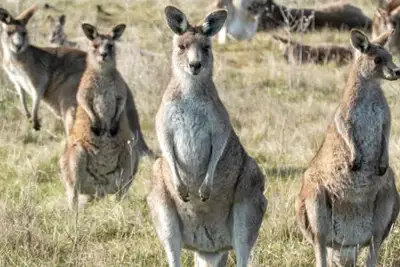
By the start of 2026, many major sportswear brands had announced plans to move away from kangaroo leather, a shift amplified by animal-rights campaigns against its use in footwear. But what is the real impact of brands such as Nike, adidas and Puma turning away from what has historically been an exceptional material for sports footwear, particularly football boots?
The negative press surrounding kangaroo harvesting is nothing new, but the subject still appears to be widely misunderstood. Back in the early 2000s, organised campaigns were already targeting kangaroo harvesting for meat and leather, with some campaigners warning that kangaroos faced extinction if harvesting was not brought to an end. At the time, an estimate cited by Environment Australia put the kangaroo population at around 20 million. More than 20 years later, current estimates from the Australian Wild Game Industry Council (AWGIC) put the population at between 40 and 50 million. Extinction was clearly never an issue.
According to AWGIC, Australia is home to around 50 species of kangaroo and wallaby, but only six are commercially harvested. Commercial harvesting of the principal species takes place under state management plans operating within Australia’s federal environmental framework. Australian government data indicates that actual harvests are generally around 3%-5% of estimated populations, despite annual quotas typically being set at 15%-20%.
As with other hides and skins, kangaroo leather is a by-product of the meat industry. The difference is that kangaroos are not farmed but form part of a managed wild population. Supporters of the industry argue that this free-ranging nature, combined with regulated harvesting and full utilisation of the animal, is one of its sustainability advantages.
Kangaroo meat is high in protein, nutrient-dense and low in fat, and is reported to have a substantially lower methane emissions profile than conventional livestock meats. The resulting leather is also distinctive. As with other wild-animal sources such as deer, boar and buffalo, the physical properties of kangaroo leather make it particularly suited to performance applications. Durable and naturally lightweight, it has a high strength-to-weight ratio and good abrasion resistance, while its fine, dense fibre structure allows relatively thin leather to retain strength and flexibility.
Industry push back
AWGIC rejects many of the arguments used by campaign groups opposed to kangaroo harvesting and the use of kangaroo leather. The organisation describes kangaroo leather as “a by-product of a thriving kangaroo meat industry” and argues that commercial harvesting forms part of wider government population-management programmes.
In correspondence shared with Footwearbiz, AWGIC said “the primary driver of the commercial harvest of kangaroos in Australia is conservation and population management” and argued that reducing commercial utilisation would not remove the need for population control measures.
The organisation is particularly critical of suggestions that removing kangaroo leather from the supply chain would reduce kangaroo harvesting. “Not using kangaroo leather does not save a single kangaroo’s life,” it said.
AWGIC has also challenged claims made by campaign organisations such as the Centre for a Humane Economy and its Kangaroos Are Not Shoes initiative, describing some of the information used in campaigns against kangaroo leather as “false and misleading”. Support for regulated kangaroo harvesting is not limited to industry bodies. Katherine Moseby, a conservation biologist and professor at the University of New South Wales, has described regulated harvesting as “an ethical and pragmatic solution supported by indigenous and conservation leaders”. Professor Moseby argues that managed harvesting helps maintain healthy kangaroo populations, protect plant communities and support threatened species, while warning that simply ending the regulated kangaroo industry would not prevent kangaroo deaths.
Inherent strength
While much of the debate surrounding kangaroo leather has focused on ethics and sustainability, its long-standing use in sports footwear has been driven by performance.
According to Andrew Luke, technical director at Packer Leather, studies conducted by Australia’s Commonwealth Scientific and Industrial Research Organisation have shown kangaroo leather to be among the strongest leathers available for a given thickness. One of its most significant advantages is its ability to retain strength even when reduced to very thin substances, a key requirement for lightweight sports footwear.
Mr Luke says that when kangaroo leather is shaved or split to around 20% of its original thickness, it typically retains between 30% and 60% of its original tensile strength. By comparison, calf leather reduced to the same proportion of its original thickness retains considerably less of its original strength.
According to Mr Luke, the explanation lies in the morphology of the skin itself. Kangaroo leather has a highly uniform arrangement of collagen fibre bundles running largely parallel to the skin surface, whereas bovine hides have a more complex fibre structure with fibres running at varying angles and interrupted by features such as sweat glands and erector pili muscles.
“This structural uniformity explains both the greater tensile strength of the whole leather and the greater retention of strength in split or shaved skins,” he says.
The ability to maintain strength at lower thicknesses allows manufacturers to produce lightweight uppers without sacrificing durability, helping explain why kangaroo leather became widely used in football boots and other high-performance sporting applications.
“Kangaroo skins are unique and in a lot of ways are perfect for very high-performance leather applications like athletic footwear and high-performance gloving,” Mr Luke adds.
Moving away
The reasons given by the major brands for abandoning kangaroo leather vary, and the materials replacing it are not necessarily the same.
Nike was among the first to make the move, announcing in 2023 that it would stop making products containing kangaroo leather. Its Tiempo football boot subsequently moved to a proprietary synthetic upper, with Nike describing the new material as a “better performance solution”.
Puma took a similar route, replacing the kangaroo leather used in its King football boot with K-BETTER. When the material was launched in 2023, Puma said it contained at least 20% recycled material and had been “proven to outperform” its previous K-Leather in testing for touch, comfort and durability.
Adidas took a different approach. The company stopped purchasing new kangaroo leather in 2024 and ended production using it during 2025, saying it would gradually replace it with other types of leather. Interestingly, adidas has indicated that kangaroo leather represented well below 0.5% of the material used in its products, putting the scale of the decision into some perspective. The company has therefore not rejected leather itself, but rather one particular source of it.
ASICS and New Balance have also ended their use of kangaroo leather. ASICS has said its decision was linked to its pursuit of "higher performance" products, despite the company's previous promotion of kangaroo leather for its football boots.
The transition has not been entirely uniform, however, suggesting that the industry's move away from the material is not yet universal.
There is also an uncomfortable question about the role of brand reputation in these decisions. When a material accounts for less than 0.5% of a company’s material use, removing it may have little practical impact on the company’s overall environmental footprint, while providing a very visible signal on animal welfare and sustainability. Whether that amounts to genuine environmental progress or, at least in part, virtue signalling is a question the brands themselves have not fully answered.
Environmental scrutiny
The environmental equation also becomes more complicated when considering what replaces the kangaroo leather. Where it has been replaced by another leather, the material source has changed but the use of leather has not. Where it has been replaced by synthetics, the environmental equation is less straightforward.
Synthetic alternatives can involve petrochemical-derived polymers, while kangaroo leather is produced from skins that the Australian industry considers a by-product of a regulated wildlife-management and meat industry.
Simply removing an animal-derived material does not, by itself, demonstrate that the replacement has a lower overall environmental impact. The durability, material efficiency, manufacturing process and eventual disposal of the replacement all need to be considered.
Puma’s claim that K-BETTER outperforms kangaroo leather also deserves closer examination.
Footwearbiz contacted Puma shortly after the announcement in March 2023 to ask for more information about the testing behind its decision to replace kangaroo leather with K-BETTER. No response was received. Puma’s announcement gave no information about the test methodology, the number of samples tested, the specific measurements recorded or the scale of any performance advantage over kangaroo leather.
Four years on, the question remains relevant. If a synthetic material is claimed to outperform one of the most highly regarded performance leathers in terms of touch, comfort and durability, the underlying evidence is important when assessing both the technical and environmental case for making the switch.
Credit: Joe Pee on Unsplash


