




Cry for help
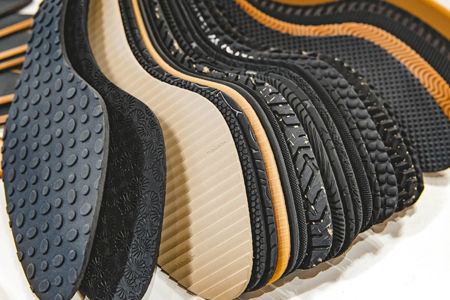
The industry body that represents footwear components manufacturers in Spain, AEC, says the entire sector is facing a crisis.
Spain’s national association of footwear component manufacturers, AEC, has said the shoe industry there is in “an extreme situation”. It has called on national, regional and local governments to put immediate measures in place to provide relief. It has also said the authorities must come up with a longer-term plan to shape the reform of a sector that it says is of strategic value to the country’s economy.
AEC says Spain lost 35% of its manufacturers of footwear and footwear components between 2020 and 2025. It contends that a total of 1,149 companies in the sector closed their doors over that time, leaving a total of 2,131 manufacturers operating at the mid-point of 2026. The organisation says it has not included in these figures businesses that shut down in the first half of this year.
Four autonomous communities, which is the term Spain uses for regions, currently account for almost 90% of the country’s footwear and footwear component production. They are the Valencia region (mostly the area around Elche), Castilla-La Mancha (mostly the area around Almansa), La Rioja and Murcia. According to AEC, Valencia lost 37% of its shoe production industry in the period in question, La Mancha almost 40%, La Rioja 17.4% and Murcia 22.5%.
Small companies
The association’s plea for help is also based on the scant scope the Spanish shoe sector has for absorbing the impact of important changes that are taking place domestically and in the wider footwear market. It says that of the more than 2,100 companies that remained in business at the end of 2025, only five of them were large companies, which it defines as enterprises employing more than 250 people. More than 1,000 of its member companies have ten or fewer employees. More than 400 of them have no employees at all.
Overall, the leather and footwear sector in Spain reduced its workforce by 3,670 people in 2025. By May 2026, AEC’s calculation is that the total number of workers remaining in the sector was 35,806, meaning that it lost a further 1,700 jobs in the first five months of this year.
Chief executive of AEC, Álvaro Sánchez, says: “Our companies cannot take it any more. We need an immediate, coordinated response from the authorities. They need to come up with a vision for our industry. This is not about individual companies here and there. We are talking here about the entire supply chain.”
Complex context
Using figures for 2024, AEC has said Spain was in nineteenth position for footwear production globally, with a total output for the year of 71 million pairs. “But this hardly reaches 0.3% of global production,” it says. Spain’s national statistics body, INE, measured the domestic footwear industry’s production volumes for 2025 at 9.2% lower than the previous year. In the first months of 2026, INE put that decline at 29.1% year on year. According to AEC, this downturn is because of “the growing competitive difficulties that our companies are facing, in an economic and commercial context that is becoming more and more complex all the time”.
AEC has concerns about labour costs. It insists that the industry in Spain is operating with “a cost structure that is significantly higher than those of its main competitors”. Putting figures on this, it quotes 2023 figures for the footwear sector’s labour costs in Spain at €15.38 per hour, a rate that compares favourably to €26.38 for Italy and €20.83 for Germany that year. But AEC says that it is not really Italy and Germany that the Spanish industry is competing with.
Balance of trade
Rather, it views countries such as Portugal, which had a rate of €9.94 per hour in 2023, and Greece, which had a rate of €9.33, as more direct competitors. Beyond this, it points to rates of between €5 and €8 per hour for countries in eastern Europe and to “much lower rates” still in the major footwear manufacturing countries of Asia, and across the Atlantic in Brazil.
Its figures show that in 2025, Spanish manufacturers and brands exported 167.7 million pairs of shoes, boots and other footwear, bringing in revenues of nearly €3.4 billion. However, retailers and brands imported 370.8 million pairs into Spain last year, with a total value of €5.2 billion. More than 80% of these imports came into the country from Asia; almost 200 million pairs came from one country alone, China.
Specific to components
When it comes to footwear components, AEC says the situation is particularly challenging. It claims that the almost 1,000 footwear component manufacturers operating across the country are attempting to cope with irregular demand and “unsustainable cost pressures” for raw materials, energy, transportation and business finance, in addition to the labour cost issues mentioned above.
In spite of all of this, the organisation insists that Spain’s footwear component companies have much to offer the market. “Our member companies are specialists,” AEC says. “They stand out for their quality, design capability, technical capacity and speed of response, plus the high levels of compliance in sustainability, traceability and product safety that are a prerequisite for working with so many brands these days.”
There was a reflection of this in the export values of Spanish-made footwear components in 2025. Shipments of these products brought in almost €1.7 billion, an increase of 3% compared to the year before.
Measure for measure
The specific help AEC is calling for includes immediate measures to halt the loss of jobs and to prevent more of its member companies from closing down.
It says the authorities should provide targeted support to small companies in particular, including help with cash-flow and in making investments to improve productivity. It also says the authorities need to review policies on imports of products from Asia, including an increase in tariffs. “We want to raise awareness of the real situation that the industry finds itself in,” it concludes, “and we want the authorities to act quickly, decisively and in a coordinated way.”
AEC insists that Spain’s footwear components manufacturers have much to offer the international market. Credit: AEC






