



Sustainable leather in transition
The leather industry is entering a period of change, shaped by regulatory pressure, market expectations and technological developments. Projects that link sustainability to practical applications can provide valuable insights. One recent initiative that has done just this was the Sustainable Yak Leather (SYL) project in Mongolia, to which Spanish research institute Inescop contributed as a technical partner.
By Esperanza Almodóvar, Project Manager, Inescop
Sustainability goals can encourage technological innovation, which in turn can facilitate greater transparency and efficiency across supply chains. A recent example that Inescop has been involved in was the Sustainable Yak Leather (SYL) project, which focused on sustainable raw materials and sustainable production of yak leather in Mongolia.
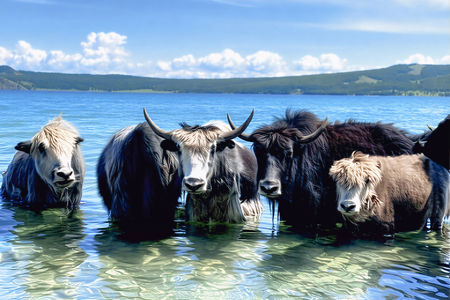
Yak hides are part of the bovine raw material supply chain, but they show considerable natural variation linked to breed, age, sex and season. In Mongolia, yaks are commonly slaughtered at at least five years of age, after several seasons of milk and fibre production. This means hides often bear natural life marks such as scratches or scars. Processed as full-grain leather, these features do not compromise performance; they contribute to a distinctive appearance and patina.
Compared to domestic cattle, yaks are typically smaller and stockier. Their hides are heavy and robust for their size, averaging around 20 kilos, or roughly 6.5% of carcass weight, with thickness varying across the hide and between animals. Older animals and males generally yield thicker material. Another feature is that the long-haired skirt around the belly area requires careful handling in beamhouse operations. Internally, the papillary and reticular fibre layers, along with the orientation of fibres, influence cutting yield and the performance of finished leather.
Seasonality and geography also affect quality. Slaughter is concentrated between October and December, with preservation often achieved through chilling or natural freezing, aided by Mongolia’s low winter temperatures. For the SYL project, hides were sourced from four provinces with significant yak populations: Arkhangai, Bayankhongor, Khövsgöl and Övörkhangai.
Tanneries and process development within SYL
The SYL project worked with the Mongolian Vegetable Tanned Yak Leather Cluster, bringing together tanneries and other stakeholders to strengthen the value chain from raw hide handling through to tanning, finishing and finished goods production. The participating tanneries were Ikh Ergelt, Buligaar, Buural Gol, Yarmag, Ikh Zam Trans, Mon Ireedui, Mongol Shevro and Arildii, among others. The project combined hands-on technical assistance with structured training, aiming to improve the quality of the raw material, boost efficiency and help companies meet international market expectations.
Technical improvements focused on three areas. Beamhouse operations were improved through better process control and chemical systems such as Easy White Tan and Zeology-based solutions. Easy White Tan, first introduced by Clariant in 2010, is a process based on Granofin Easy F-90, an organic compound free from metal, aldehyde, formaldehyde and phenol. Zeology is a concept that Smit & Zoon launched in 2020. This technology is based on the mineral zeolite and is also heavy metal- and aldehyde-free.
Vegetable tanning and subsequent processing steps were refined to align with sustainability objectives; and finishing operations shifted towards lower-energy, lower-emission approaches. SYL encouraged a move away from heavily pigmented, coated finishes. It helped leather manufacturers to allow the natural characteristics of yak leather to remain visible in the finished product, while reducing chemical usage at the same time.
Project impact
The SYL project delivered tangible results across multiple levels of the value chain. Local tanneries adopted cleaner, more energy-efficient production methods and improved waste management. Over 200 individuals were trained in occupational safety, pre- and peri-slaughter operations, raw-material quality, chemical risk management and sustainable tanning and finishing techniques.
Traceability systems were developed, and guidance on meeting international market requirements helped position vegetable-tanned yak leather as a high-quality, eco-friendly material. The project also engaged with local authorities and institutions to encourage uptake of sustainable practices and integrate them into national development strategies.
By combining technical innovation, capacity building, community engagement and international cooperation, SYL demonstrated that the shift toward sustainability is not only necessary but also economically and socially viable. The project illustrates that sustainability can be a competitive advantage. Sustainable practice can also provide a replicable model for transformation when diverse stakeholders unite around a shared vision.
Conclusion
Responsibly sourced and processed leather will continue to hold a place as a high-value, durable material with cultural and technical significance. Projects such as SYL show that sustainability can be achieved through practical improvements in sourcing, processing and skills development without compromising performance or quality. They illustrate that the transition to more responsible production is not only possible but also economically and socially advantageous.
Transformation in the leather industry is already under way, and its long-term success will depend on collaboration across the value chain and on embedding sustainability into the core of business strategy. Leather’s continued relevance will rely on our ability to balance environmental responsibility, technical excellence and market demand, ensuring that sustainability is not treated as an add-on but as a defining feature of the material’s value.
In Mongolia, yaks commonly go to slaughter after several seasons of milk and fibre production, which means the hides often bear natural life marks such as scratches or scars. Credit: Sustainable Yak Leather project/Inescop






