




Own-factory advantages
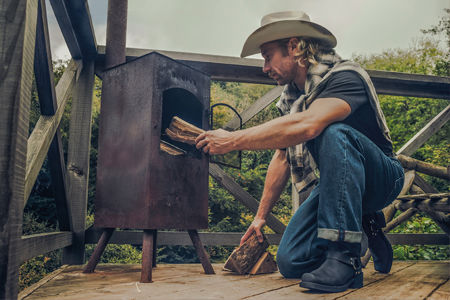
As the whole business world tries to find ways to navigate tariffs and turmoil, footwear group Rocky Brands says its policy of keeping at least some production in house has brought benefits.
In the hard-to-predict business world of the mid-2020s, keeping some manufacturing in house has paid dividends for footwear group Rocky Brands. Its long-established, closer-to-home supply chain links are helping it work its way through the tariff turmoil. In the first nine months of 2025, the group brought in revenues of $342.25 million, an increase of just over 5% compared to the same period a year earlier.
Price increases helped, chief executive, Jason Brooks, acknowledges. He accepts that the group’s retail partners were always going to be less than enthusiastic about these changes, but he insists they understood the reasons behind them. “The good thing is that everybody had to deal with this [the tariffs],” he continues. “Retailers were able to take the price increases and we have seen our consumers navigate the situation too.”
Percentage gains
Producing uppers in Rocky Brands’ home country, the US, moving them to be “bottomed and soled” at its own factory in the Dominican Republic and shipping finished product back into the US from there is not tariff-free. The US’s Dominican Republic-Central America free trade agreement (CAFTA-DR) remains in effect, but tariffs apply in this case because some of the materials and components that the factory on the Caribbean island uses come from much further afield. At the time of writing, this footwear carries a tariff of 10%.
In comparison, Rocky Brands also has its own factory in China. Product from there coming into the US in the early part of 2026, with base tariffs and country-specific additional tariffs, carries a total tariff burden of around 40%. Work boots, of the kind Rocky Brands specialises in, coming into the US from Vietnam currently carry a total tariff of around 50%.
Bite the bullet
Chief finance and chief operating officer, Tom Robertson, makes an interesting observation on the effect of this on the group’s activity in China. Lower production costs in Vietnam have brought brands round to sourcing from there in recent years, even though many of the raw materials supplying factories in Vietnam still come from China. If equal or even higher tariffs are going to apply to footwear shipped from Vietnam, Mr Robertson argues that it can make sense just to keep manufacturing of some products in China.
If tariffs are a bullet you have to bite anyway, you may as well take advantage of the shorter supply chain China offers. It may have helped that with many companies “trying to get out of China”, the prices partners there were offering were better; they now have more capacity. “This has made China more competitive,” he insists.
Different way of thinking
He calculates that the full impact of tariffs on Rocky Brands in 2025 will come out at around $20 million. With the time it takes for inventory to work its way through and appear on the balance sheet, he says it will probably be the second half of 2026 before the group sees the full benefit of the adjustments it has put in place to address the impact of the tariff situation on the business. When that benefit does shine through, he believes the group’s gross margins will be greater than they were pre-tariffs. Leveraging to a greater extent than before the group’s in-house manufacturing facilities has been the main change.
Like tariffs or not, Jason Brooks says they pushed the company to “think a little bit differently”, especially when it comes to how it manufactures its footwear. “I don’t know how many of our peers have manufacturing capabilities like ours, or if any of them have,” he goes on. Increasing output at its factory in Puerto Rico is another example. Puerto Rico is an unincorporated territory of the US; shoes and boots from there qualify as US-made, Mr Brooks points out. As a result, he says Rocky Brands will be able to start producing a totally US-made version of its Muck brand’s Chore boot in the early part of 2026. The Chore is a waterproof work boot, particularly suited to farmers and others who spend a large part of their day in muddy fields.
Outdoor appeal
The group has five different active, consumer-facing brands (Rocky, Durango, Georgia Boot, Muck Boot and Xtratuf) and its product range is varied. Its outdoor products include neoprene rubber boots (long and ankle-height) from Xtratuf. Many of these started out as footwear for fishing, but Jason Brooks claims that some of the styles have now become “a little bit of a fashion product, but still very functional”. Some Xtratuf boots now have fleece lining and have become popular for cold-weather wear in places that are far from any ocean, including Colorado and Wyoming.
Muck is a brand that made something of a comeback in 2025. To use the chief executive’s phrase, the group “saw this brand explode” in 2022 and 2023. Immediately after that, though, there was a slow period because retailers were “over-inventoried”. Last year was better and he says he is excited about where the brand is going in 2026.
With Rocky, Georgia and Durango, he says it mainly depends on the season and the mood of the times. Western boots such as the Bronco and the Original Ride have been popular, helping to meet the surge in demand for cowboy-themed products that singer Beyoncé brought about in 2024 with the release of her Cowboy Carter album. This album generated 76 million streams on Spotify on the day of its release.
Fashion editor of the New York Times, Vanessa Friedman, said Beyoncé had made Western aesthetics “the look of the moment”. Echoing this, Mr Brooks says: “Western was hot, although it seems to have calmed down now a little bit.” Products such as the BearClaw and Blizzard Stalker boots are popular in the hunting season, he adds, while work boots are “steady business”. This category is performing strongly for the simple reason that the products work well. “Our products are like tools,” the chief executive says. “People need them to go to work. Yes, we introduce new shoes every year and try to broaden our offering. But we have products that have been in the line for 35 years; the same outsole, the same leather, everything is the same. They are there because our customers use them.”
Durango boots became popular during the recent Beyonce-inspired Western style craze. Credit: Rocky Brands






